
Bali Spiritual Healing Experience — Melukat, Balian Visit & Sacred Cleansing
A melukat purification beneath the sacred springs of Tirta Empul. A consultation with a respected balian (traditional Balinese healer). A sound bath in a jungle-edged sanctuary. Our team coordinates these deeply traditional Balinese spiritual experiences with respectful local guides, never as performance — always as the genuine practice the Balinese have lived for over a thousand years.
Experience Includes
- Respectful Balinese guide
- Sarong & ceremonial sash
- Temple entry & offerings
- Cultural orientation briefing
- Hotel pickup & drop-off
- Bottled water & light snacks
- Translator (English/Balinese)
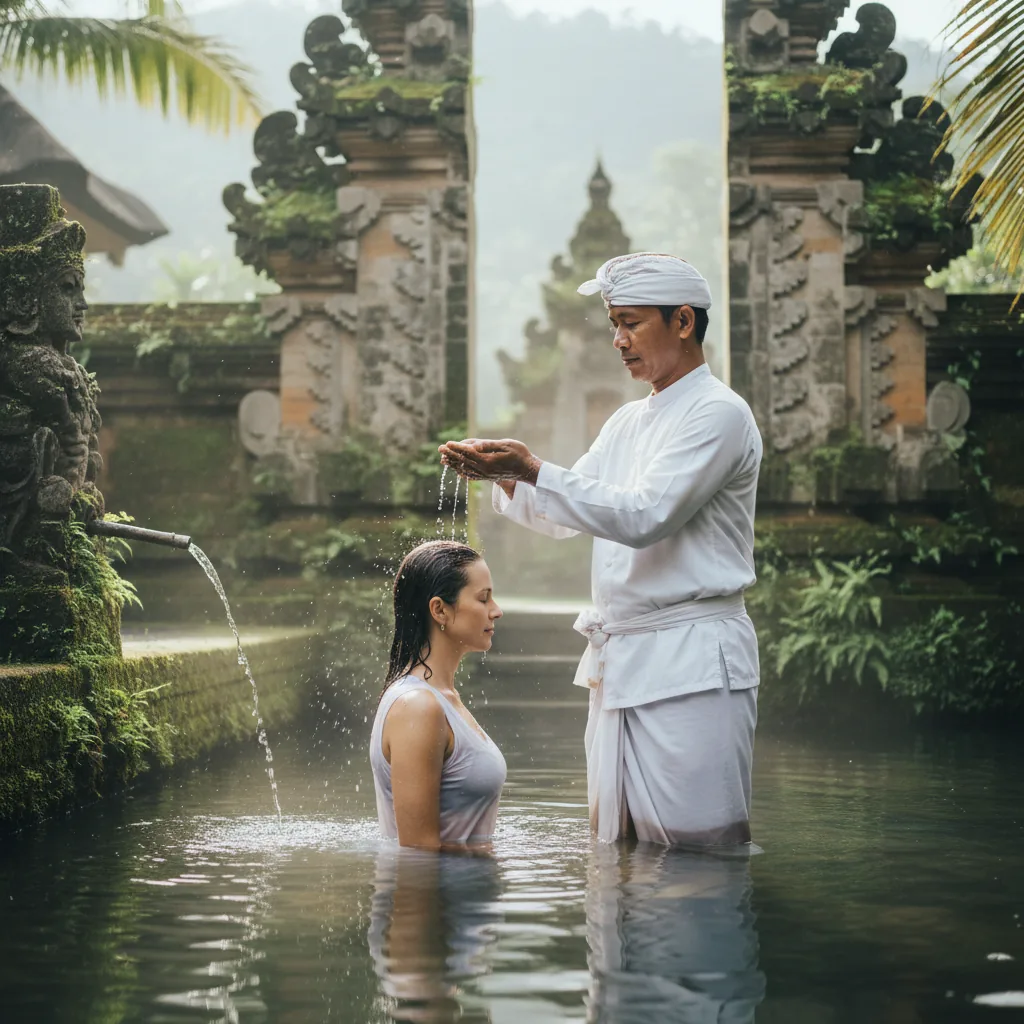
What is a Balinese healing experience? A Balinese healing experience is a coordinated visit to one or more of the island's traditional spiritual practices — melukat (water purification at sacred springs like Tirta Empul), balian consultation (visit with a recognised Balinese healer / shaman), sound healing (singing-bowl and gong sessions in jungle sanctuaries), the watukaru retreat tradition, or palm-leaf reading. As a registered Indonesian travel agency, our team operates the concierge layer — coordinating the visit, providing respectful cultural orientation, arranging the offerings (canang sari) required at temples, and translating between guests and the Balinese practitioner. We are not the healers ourselves, and we never pretend to be. Sessions are conducted by recognised local practitioners with the cultural standing in their village to perform these practices, and every booking is reviewed for ethical conduct (no exploitation, fair compensation to practitioners, full informed consent for guests). Pricing depends on the itinerary (half-day single-experience visit, full-day multi-experience, or three-day immersion retreat) — ask us for a quote. Hotel transfer, sarong, offerings, and translator are included.
What Happens in a Balinese Healing Visit
Melukat — sacred water purification. The most-requested Balinese spiritual practice, and the one most accessible to first-time visitors. Our guide drives you to Tirta Empul (the central temple of the practice, founded in the 10th century), provides a sarong and ceremonial sash, walks you through the appropriate offerings (canang sari, the small palm-leaf baskets you'll see Balinese carry everywhere), and leads you under the sequence of stone water-spouts in the holy bathing pool. Each spout corresponds to a specific intention — letting go of the past, releasing illness, setting forward intention. The whole sequence takes about 90 minutes. For a more private experience we can also arrange melukat at quieter springs (Sebatu, Pengastulan) where there are no other tourists.
Balian — consultation with a traditional healer. A balian is a respected Balinese healer who works with herbs (balian usada), prayer (balian taksu), or massage and bone-setting (balian apun) — depending on their lineage. This is the practice made famous internationally by Eat, Pray, Love, and as a result is now both heavily commercialised and deeply protected by villages who don't want their healers turned into a tourist attraction. We work only with balian who have given explicit consent to receive visitors, in their own time, under their own terms — and we strongly discourage treating the visit as entertainment. Sessions typically last 45–90 minutes and involve listening, observation, and a short ritual or recommendation. Many guests find them quietly moving; some find them perplexing; some don't connect at all. We're upfront about all of this before booking.
Sound healing & meditation. A more contemporary wellness practice that has settled comfortably into Bali's ecosystem — singing-bowl baths, gong meditations, breathwork sessions in retreat centres around Ubud, Sidemen, and Mount Batukaru. These are run by both Indonesian and international practitioners; we curate the well-regarded ones and avoid the spiritual-tourism factories.
Other arrangements include palm-leaf reading (lontar), Balinese astrology consultations, multi-day silent retreats at Mount Batukaru, fire ceremonies, and gentle yoga and qi-gong sessions in jungle sanctuaries. Every booking includes a pre-visit cultural-orientation briefing so guests arrive understanding what they're participating in and how to engage respectfully.
Healing Experience Packages
- Tirta Empul or quieter spring
- Cultural orientation briefing
- Sarong, sash & offerings included
- 4–5 hour total experience
- Hotel transfer included
- Melukat + balian consultation
- Lunch at traditional warung
- Sound healing in afternoon
- 8–9 hour total experience
- Hotel transfer included
- Mount Batukaru retreat centre
- Daily melukat & meditation
- Two balian consultations
- All meals & accommodation
- Optional silent-day option
All packages include hotel transfer, sarong, ceremonial offerings, English-Balinese translator, and a respectful cultural-orientation briefing before the first visit. Practitioners are compensated directly at the standard local rate.
How We Approach Spiritual Tourism Ethically
Bali's spiritual culture has, for better and worse, become a global wellness brand. Some of what's offered to visitors is genuine; some is theatre dressed up as tradition; some is exploitative of practitioners who can no longer say no. We've been operating in Bali long enough to know which is which, and our policy on healing and ceremonial bookings is conservative on purpose.
Practitioners come first. Every healer, ceremonial leader, or cultural host we work with has explicitly consented to receive guests, sets their own schedule, and is paid at the standard rate the Balinese themselves pay (we do not negotiate down, ever). We will turn down bookings on a healer's behalf if they are tired, sick, or in a ceremonial period of their own family.
Cultural orientation is non-negotiable. Before any temple visit, ceremony, or balian consultation, our guide spends 20–30 minutes briefing guests on the cultural framework — what's happening, why, what to do with your hands, when not to take photos, what the canang sari offering actually is, what to say (and not say) when you meet the healer. This isn't a lecture; it's the difference between participating respectfully and being a problem.
No expectation, no promise. Spiritual practices don't deliver predictable outcomes. We won't promise revelations, healings, or visions — and if a guest is approaching the booking with a fragile mental-health expectation, we'll honestly recommend a different kind of experience. The right framing is curiosity and respect, not a transaction.
We also actively decline to book the more theatrical "tourist healers" who have built showbusiness practices around international visitors, the Instagram-only melukat ceremonies that shortcut around actual temple protocol, and any practice that involves substances or rituals that wouldn't be acceptable to the local village's Hindu council. If a guest specifically wants those, we politely refer them elsewhere.
Healing Experience Questions
No. Melukat, balian visits, and most Balinese ceremonial practices welcome non-Hindu visitors as long as the protocol is respected — appropriate dress (sarong, sash), correct behaviour at the temple, and the small ceremonial offerings. Our guide handles all of this for you. Many of our guests are agnostic, secular, or from other religious traditions; the Balinese framing is simply that you treat the practice with the same respect you'd give your own.
Most balian speak Balinese and Indonesian, not English. Our translator (a member of our team or the local guide) translates the entire conversation in real time, in both directions. The translation is faithful — we don't filter or "improve" what the healer says, even if it's unexpected.
Tirta Empul is open to general visitors, and many tourists do enter the bathing pool without proper ceremonial framing — that's not melukat in the meaningful sense, that's swimming in a holy spring. A genuine melukat involves the canang sari offerings, the correct intention-setting at each spout, a guide who explains what each pool represents, and ideally a quieter time of day. We arrange the proper version. If a more secluded spring is preferred, we can offer Sebatu or Pengastulan instead, where you'll often be the only person there.
For temple visits, sarong and a sash around the waist are required for everyone — we provide both, included in every booking. Underneath, modest clothing (covered shoulders for women is appreciated, no short shorts). For melukat, bring a swimsuit or modest underclothes you don't mind getting wet, plus a change of clothes for after. For balian visits, normal modest clothing is fine — no sarong required at the healer's home.
Melukat involves cool spring water and standing on slippery stone — physically gentle, but please mention any cardiovascular conditions or balance concerns at booking. Balian consultations are conversational and physically gentle; they are not a substitute for medical care, and we'll say so directly if a guest seems to be using the visit to avoid actual medical attention. If you're under medical treatment, please continue it — these practices are complementary, not alternative.
For half-day melukat, 5–7 days ahead is usually enough. For balian consultations, we recommend 2–3 weeks because the most respected healers have limited availability and we coordinate around their family ceremonial calendar. For multi-day retreats at Batukaru, 1–2 months ahead is best — those are small-group experiences with limited spots.